
There are a handful of universal constants that determine the success of any organization. They include things like visionary leadership, product-market fit, competitive differentiation, and great people.
In the end, though, sales is what ultimately determines an organization's success, and developing profiles that describe your best prospects is part of an effective sales strategy. By knowing what makes for a good prospect, you can be confident that you're spending your precious time and energy with the people most likely to become customers.
Here's the 4-step process I use for developing prospect profiles.
Step 1. The Target Audience
This and Step 2 are tied to product-market fit. This is where you think about your target market in a top-down way, starting with general indicators such as revenue, industry, employee size, etc.
Step 2. Other General Characteristics of a Good Prospect
These are details that paint a clearer picture. It includes things like how your best prospects operate, the markets they serve, how they serve them, and anything that's going to provide clarity for you and the sales teams.
Step 3. Recognizing Prospect Types
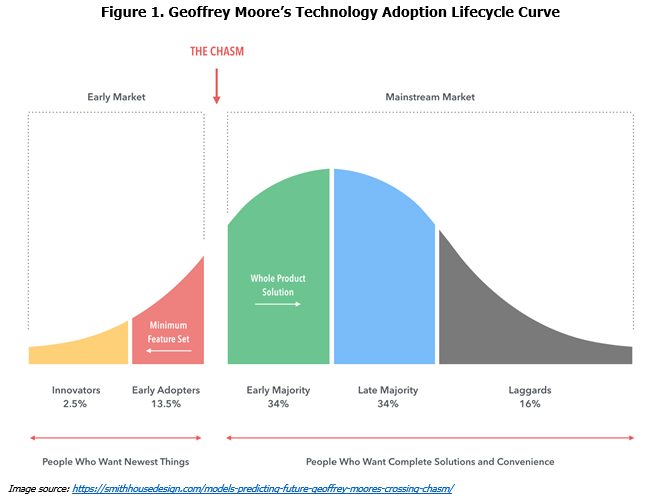
A prospect is ultimately a person. As such, it's important to account for both their interests and their appetite for risk relative to your solution. It's important to think through how your prospects will separate themselves as people into buyer types such as Innovators, Early Adopters, Early Majority, Late Majority, and Laggards.
Step 4. Mapping Your Benefits to the Prospect Types
Time to get specific by mapping all of your benefits to the type of buyer who will see the greatest value in each benefit.
Geoffrey Moore's Technology Adoption Lifecycle Curve (Image source: Smith House Design)
For example, Innovators are people who like to be the first to try something new. What is it about your solution that will appeal to the people who like being first and who are glad to take calculated risks if there's the potential for reasonable ROI and an edge they'll have over their competitors? That's what you want to spend your time talking about with Innovators.
Buyers who, on the other hand, are concerned with whether or not your solution is already in use by others, follows some well-established standards or regulations, or who look for some indicators of stability from you and your business are exhibiting characteristics of an Early Majority buyer. You need to know what it is about your solution that addresses and assuages these kinds of concerns if you can. If you can't, my advice is not to ruin your reputation and the possibility of a future sale by pretending that you can.
By using Prospect Profiles, your prospecting, qualifying, discovery, and selling will be more efficient, and your prospects will be far more likely to see you as the Trusted Adviser you are because you're always keeping the focus on what matters most to them.
Want to discuss this further?
Book a free discovery call and let's talk through what's relevant to your business.
Book a Discovery Call