
Where's the Controversy When It's Good for Business?
October 11, 2024
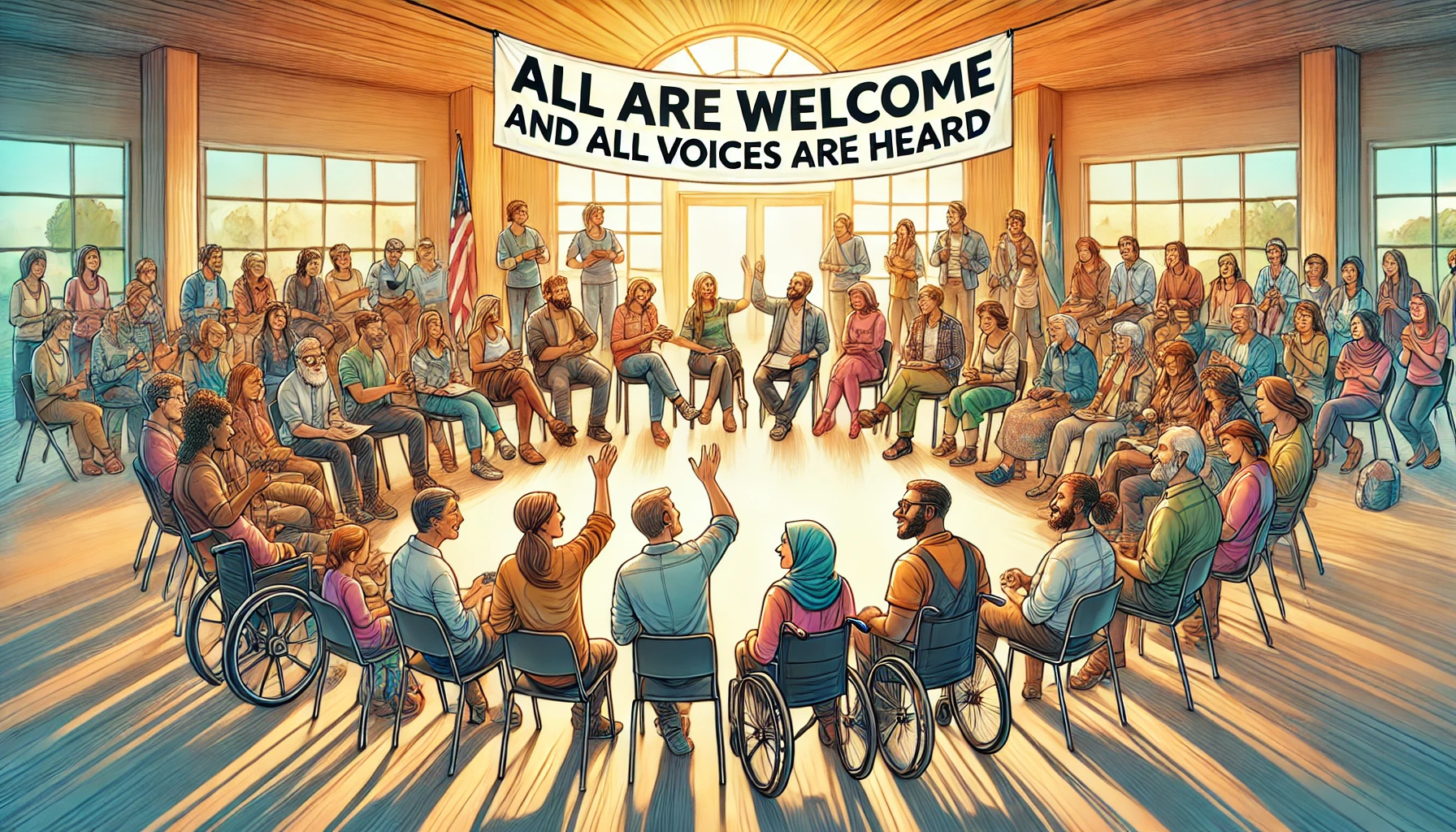
I was wondering why DEIA is "controversial" with some people when McKinsey, BCG, HBR and others say it's good for business, so I gave ChatGPT4o this prompt:
Write a 300-word blog post addressing the question, "Why is that DEIA has become controversial? Isn't more diversity, equity, inclusion, and accessibility good for business?"
I'd rather have the dialog with you.
4o's answer and my response are below. You're invited to join in the discussion.
4o: Diversity, Equity, Inclusion, and Accessibility (DEIA) have become hot topics in the business world, yet their implementation has sparked debate. While the core principles of DEIA are widely seen as beneficial — fostering innovation, improving employee morale, and reflecting a more diverse customer base — their execution often leads to differing opinions.
Me: It's ok to have differing opinions about implementation. What comes next starts to pull the curtain back.
4o: One reason DEIA is controversial is that some businesses struggle with how to implement these principles effectively. For example, the shift toward DEIA initiatives can seem performative if companies fail to align their actions with their values, creating skepticism among employees and customers.
Me: "...struggle with how to implement..." Let's call this what it is: weak leadership. If what you're doing as a leader is consciously performative — especially when it literally affects people's lives — you're failing as a leader.
4o: Others fear that focusing too heavily on diversity quotas or inclusive language could detract from merit-based hiring and performance. This tension arises from a perceived conflict between inclusivity and maintaining standards of excellence.
Me: There's that word: quotas. My understanding of DEIA is pedestrian. What I'm pretty sure of is that "quotas" are not part of how experts talk about DEIA. This sounds like a dog whistle to me.
Me: Then I'm compelled to ask, "What's so wrong with inclusive language? Why is that a problem for anyone?"
Me: Finally, are there really people saying that inclusivity and excellence are mutually exclusive? Yikes.
4o: Additionally, DEIA efforts can become political flashpoints, as social and cultural debates shape how businesses respond to issues like race, gender identity, or disability. Companies that take a public stance may alienate parts of their customer base or workforce, leading to backlash or accusations of virtue signaling. This dynamic has made it difficult for some leaders to navigate DEIA initiatives without facing criticism from different sides.
Me: Again, this falls into the category of weak leadership. Leaders are supposed to have courage. They're supposed to have a vision and through their courage inspire others to help achieve the mission that brings the vision to life.
Me: I agree that to be performative can be virtue signaling. That's almost as bad in my view as signaling to their employees, partners, shareholders, and markets that they are ambivalent, cowardly, or worse, hostile to diversity, equity, inclusion, and accessibility.
Me: Alienating their customer base? What are they selling and to whom? Who gets alienated by ideas like diversity, equity, inclusion, and accessibility?
4o and I agree:
4o: However, research consistently shows that businesses with diverse teams often outperform their less diverse counterparts (McKinsey, BCG, HBR). Diverse perspectives lead to more creative problem-solving, better customer insights, and a broader reach into new markets. Moreover, equity and inclusion create a sense of belonging, which can boost retention and attract top talent.
Ultimately, while DEIA's positive impact on business is well-documented, the controversy lies in the complexities of implementation and the varied social and cultural lenses through which it is viewed. Addressing these challenges with intention and transparency is key to unlocking the true benefits of a diverse and inclusive workplace.
What do you think?
Are the concepts of greater diversity, equity, inclusion, and accessibility influencing your thinking about your business? Share your thoughts in the comments.
Citations
McKinsey & Company (2020) — Diversity Wins: How Inclusion Matters: This report highlights that companies in the top quartile for gender diversity on executive teams are 25% more likely to have above-average profitability compared to companies in the fourth quartile. Additionally, it finds that companies with more ethnic and cultural diversity outperform those with less diversity by 36% in profitability.
Boston Consulting Group (BCG) (2018) — How Diverse Leadership Teams Boost Innovation: BCG's study found that companies with above-average diversity on management teams report innovation revenue that is 19 percentage points higher than companies with below-average leadership diversity.
Harvard Business Review (2016) — Why Diverse Teams Are Smarter: This article synthesizes research showing that diverse teams are better at making decisions and solving problems. It points to studies indicating that diverse teams are 60% more likely to make better decisions.
Want to discuss this further?
Book a free discovery call and let's talk through what's relevant to your business.
Book a Discovery Call